In the last few years, one term has taken over the worlds of manufacturing, engineering, medical science, and even home creativity-3D printing. If you are curious about what is 3d printing, how it works, and why industries are adopting it at a rapid pace, this blog will help you understand everything in a clear and simple way.
What Is 3D Printing?
To put it simply, 3D printing is a modern technique where digital designs are turned into physical objects layer by layer. When people ask what is 3d printing, the easiest answer is: it is the process of creating a real object from a digital file using a special machine called a 3D printer.
This technology has become so popular that it is changing how products are made. From toys, tools, and machine parts to medical implants and even houses-3D printing technology is pushing the limits of innovation.
Start Your 3D Printing Project Now
What Is a 3D Printer?
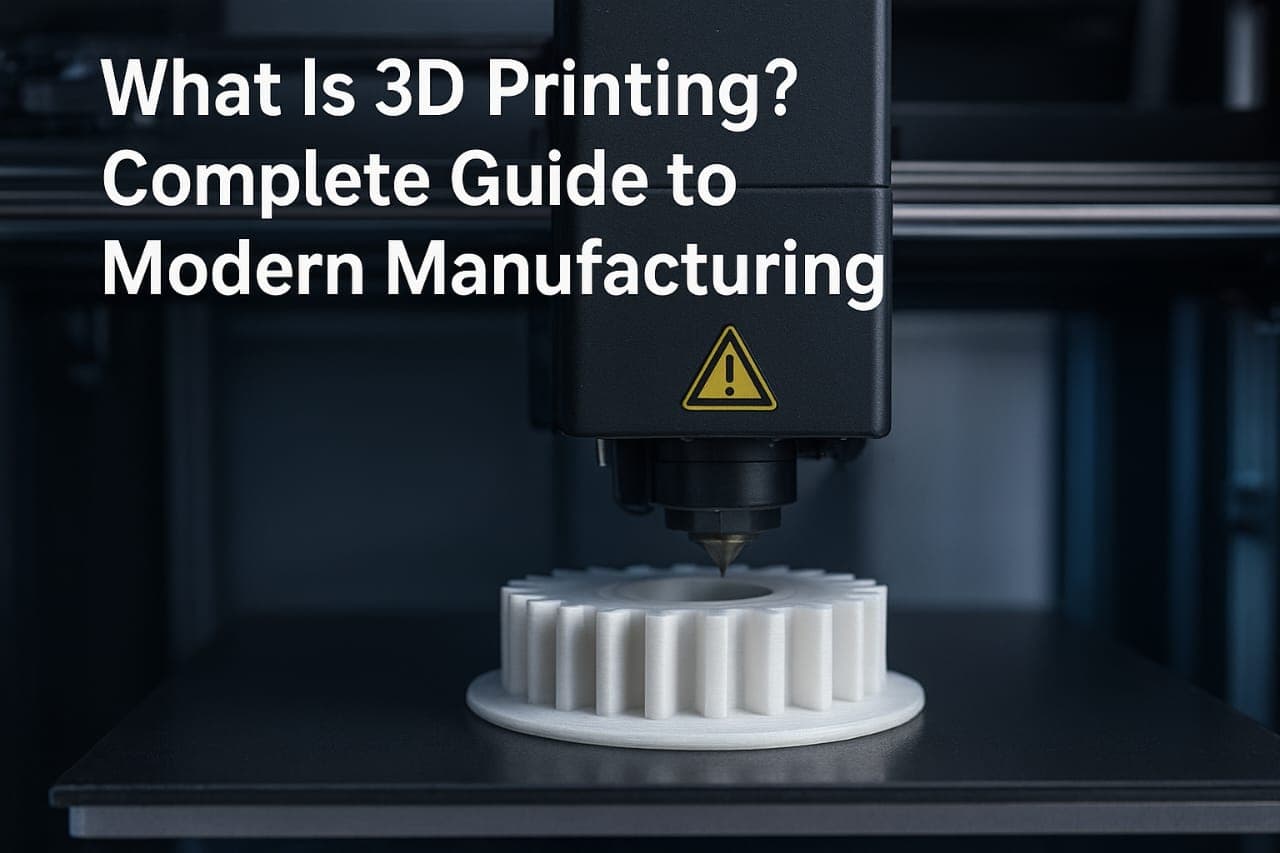
Before understanding how 3d printing work, you should know what is a 3d printer. A 3D printer is a machine that reads a digital 3D model and then prints it layer by layer. Imagine drawing one thin slice of an object, then placing another slice on top of it, and repeating until the object is complete. That is exactly how 3d printer works.
How 3D Printing Technology Works
If you're wondering what is 3d printing technology, here’s a simple explanation:
-
A Digital Model Is Created
It can be designed using 3D software or downloaded from a 3D model website. -
The Model Is Sliced Into Layers
Special software divides the model into thousands of thin horizontal layers. -
The 3D Printer Starts Printing
Using materials like plastic, resin, metal, or even concrete, the printer places one layer at a time. -
The Final Product Is Formed
Once all layers are complete, you get a solid physical object.
This layer-by-layer technique is what makes three d printing unique compared to traditional manufacturing.
How 3D Printing Work in Real Life
You may still wonder how 3d printing work in real-world applications. The process depends on the type of 3D printer and the material used. For example:
-
FDM (Fused Deposition Modeling): Uses melted plastic filament to build objects.
-
SLA (Stereolithography): Uses liquid resin cured by UV light.
-
SLS (Selective Laser Sintering): Uses laser to fuse powdered material.
This means 3D printing is suitable for making prototypes, industrial parts, medical models, and artistic creations.
Applications of 3D Printing Manufacturing
3D printing manufacturing is growing in almost every industry because it offers:
1. Fast Prototyping
Companies can 3D print sample models in a few hours instead of waiting weeks for traditional production.
2. Cost-Effective Production
Small batches of products can be made at low cost, making it ideal for startups.
3. Medical Advancements
Doctors use 3D printing technology to create artificial limbs, dental implants, and anatomical models for surgery.
4. Architecture & Construction
3D printers can even print homes, reducing cost and construction time.
5. Custom Products
Customized jewelry, phone accessories, tools, and even shoes can be made using three d printing.
Benefits of 3D Printing
Here are the biggest advantages of 3d printing:
-
Speed: Products can be made quickly.
-
Flexibility: Any shape can be printed without complex machinery.
-
Waste Reduction: Only required material is used.
-
Customization: Each item can be designed differently.
-
Accessibility: 3D printers are becoming more affordable for homes and businesses.
With such benefits, it becomes clearer what is 3d printing and why it is shaking up the manufacturing world.
Experience expert-level precision with Proevove - the best in professional 3D printing.
Why 3D Printing Is the Future
As industries shift toward faster and smarter production methods, 3d printing manufacturing will play a major role. From aerospace parts to artificial organs, 3d printing technology is helping bring ideas to life.
Many experts believe that in the next few years, every household may have its own 3D printer. People will be able to 3d print tools, toys, spare parts, and customized products at home.